














Moondream · Curtain heading guide
Which heading should you choose for your curtain?
The heading is the top of the curtain. It determines how the curtain is hung, the shape of the pleats and its overall style. If you already have a curtain rod or track, choose a compatible heading. Otherwise, choose your preferred heading first, then a suitable hanging system.
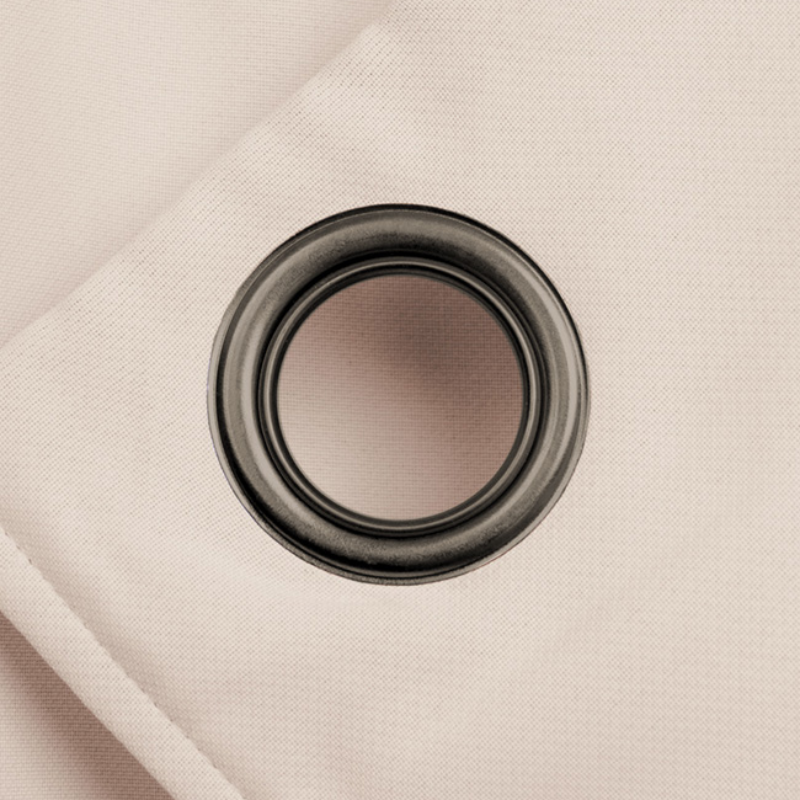
Eyelets
A contemporary look
The rings built into the top of the curtain slide directly onto a rod, creating even folds. This heading is particularly suitable for curtains you open and close frequently.
The eyelets have an internal diameter of 4 cm (approx. 1.57 inches). Choose a rod with a maximum diameter of 3 cm (approx. 1.18 inches) so the curtain can slide easily.
Four colours are available: matt gunmetal, matt black, matt silver and matt gold. For outdoor curtains, only matt gunmetal is available.
Installation: on a round curtain rod threaded through the eyelets.
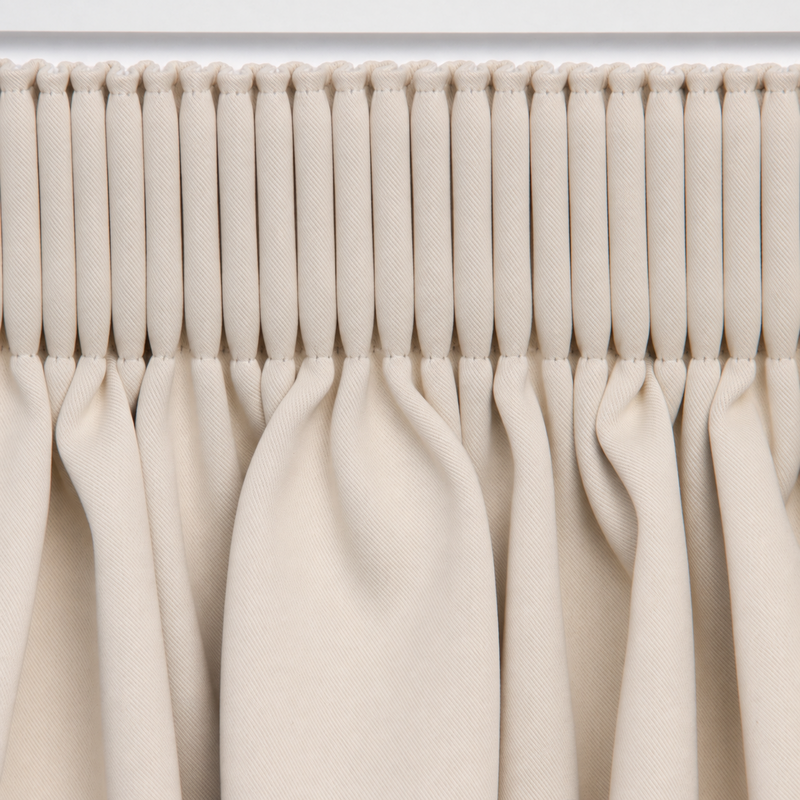
Pencil pleat
Adjustable gathers and a soft drape
Pencil pleat heading tape is 7 cm high (approx. 2.76 inches) and sewn along the top of the curtain. It allows you to create gathers and adjust their fullness for a more or less pleated look.
The reinforced heading supports the top of the curtain and helps it hang beautifully.
Hooks are supplied and inserted into the heading tape. They allow you to hang the curtain on a track or a rod fitted with rings.
Installation: on a track or a rod with rings compatible with the hooks.
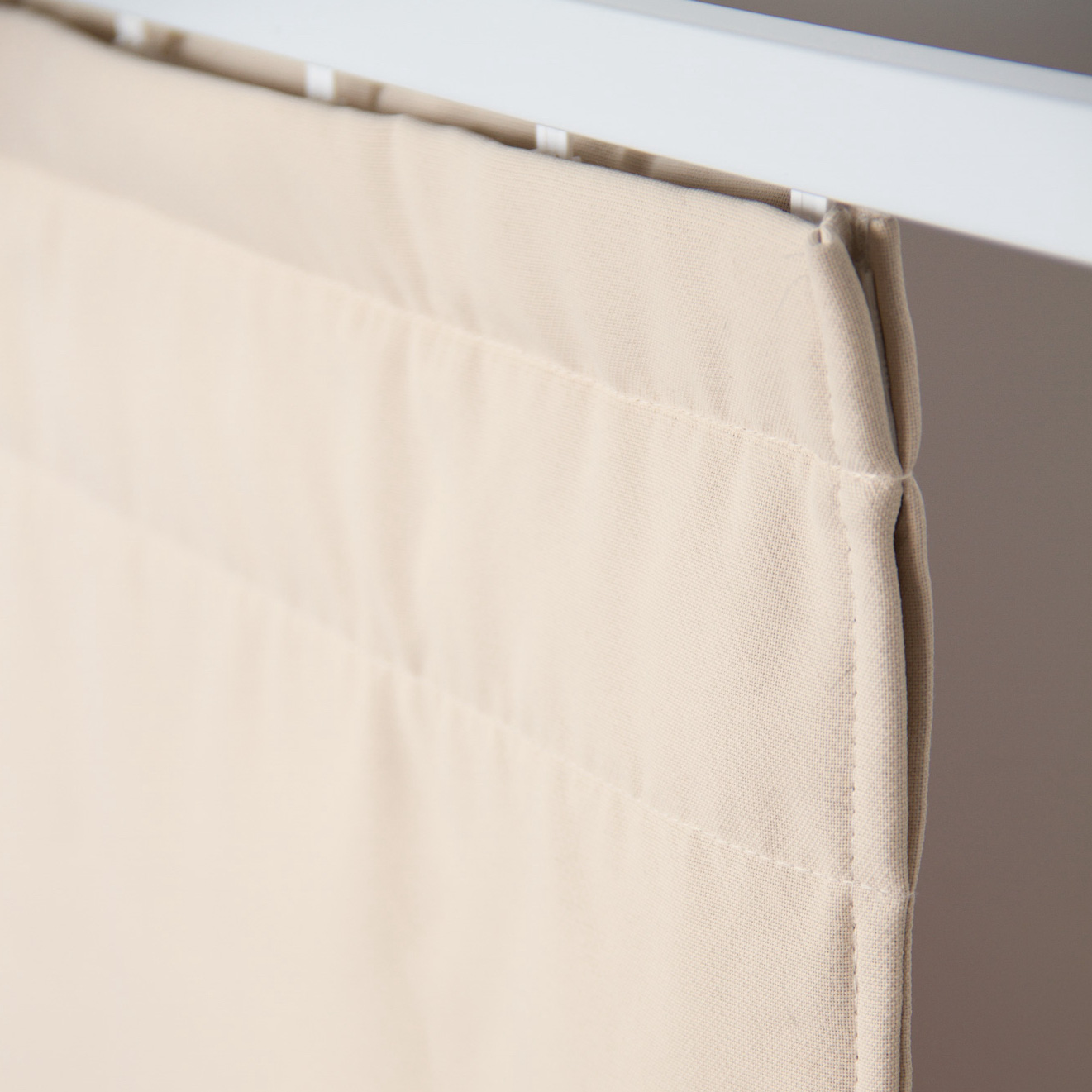
Room divider version
This detail shows the pencil pleat heading on the room divider curtain.
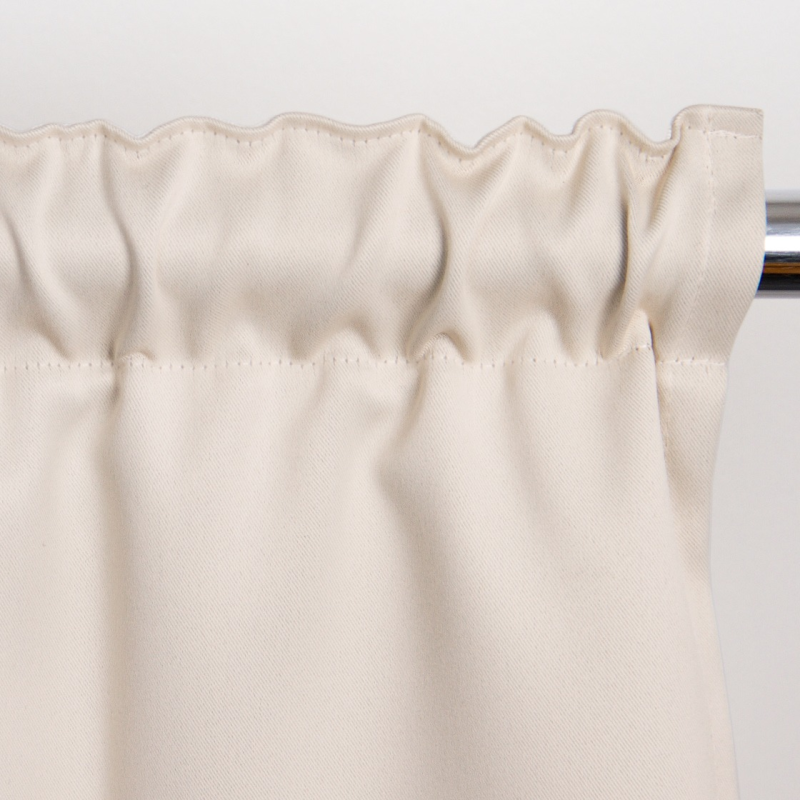
Rod pocket
A rod concealed within the fabric
The rod slides through a fabric pocket sewn into the top of the curtain. The fabric conceals the rod and gathers to varying degrees depending on its thickness.
The pocket opening measures 3 cm (approx. 1.18 inches): the rod diameter must therefore be less than 3 cm (approx. 1.18 inches).
This heading is less suitable for frequent opening and closing, and is not recommended for wide or heavy curtains, particularly soundproof models.
Installation: on a round curtain rod threaded through the fabric pocket.
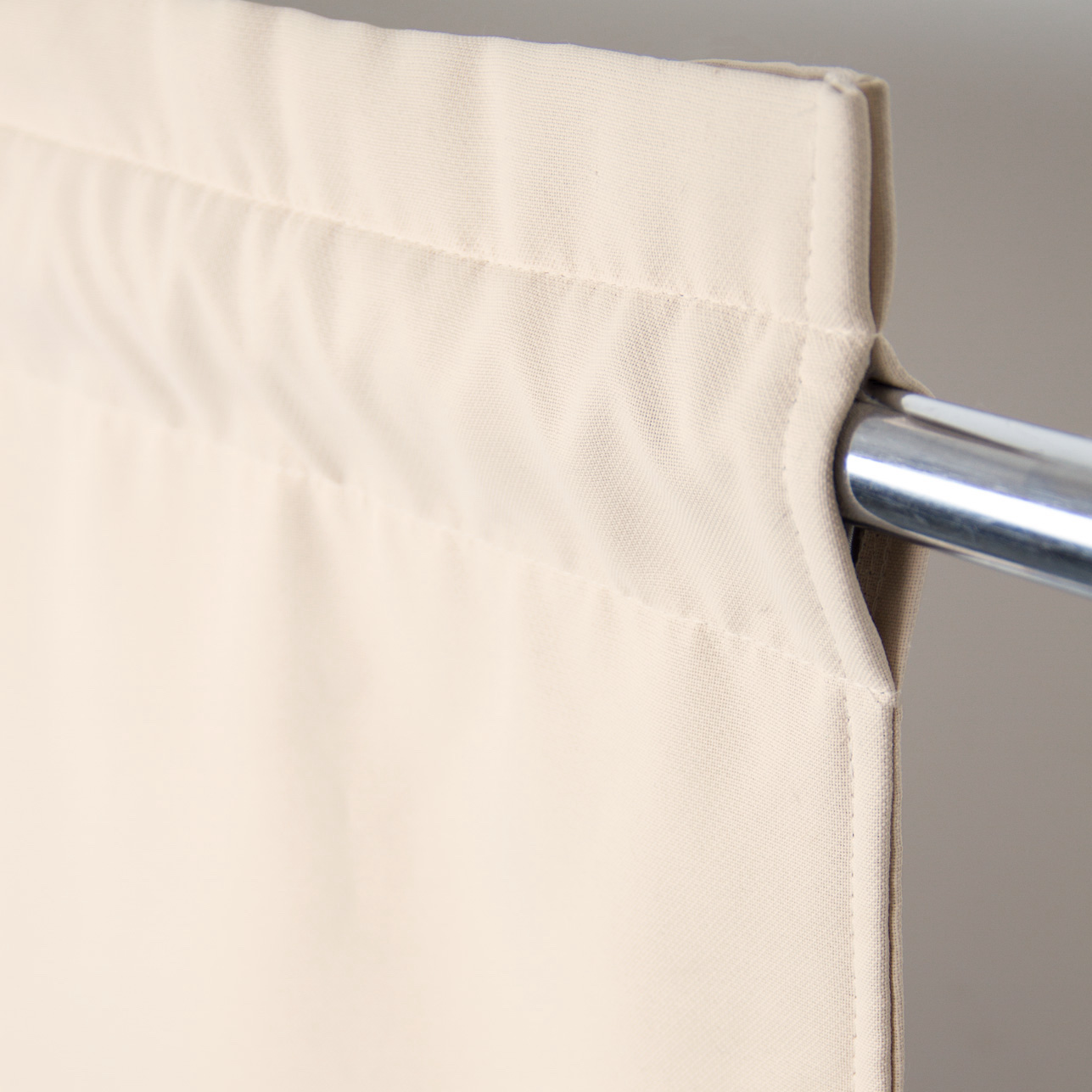
Room divider version
The room divider curtain has a specific rod pocket heading, shown here.
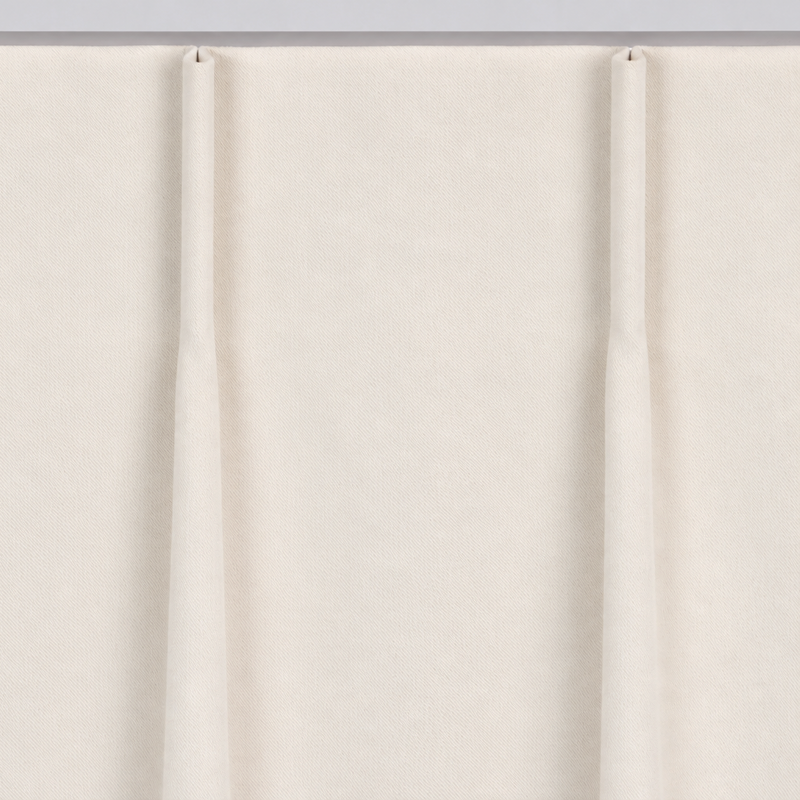
Single pinch pleat
An even, structured drape
Single pleats are sewn at regular intervals along the top of the curtain. Unlike pencil pleat headings, the pleats are already formed.
This heading creates a simple, elegant look with a structured top.
Microflex hooks are already fitted and sewn onto the curtain for hanging on a track. The hooks are height-adjustable.
Installation: on a track compatible with the Microflex hooks.
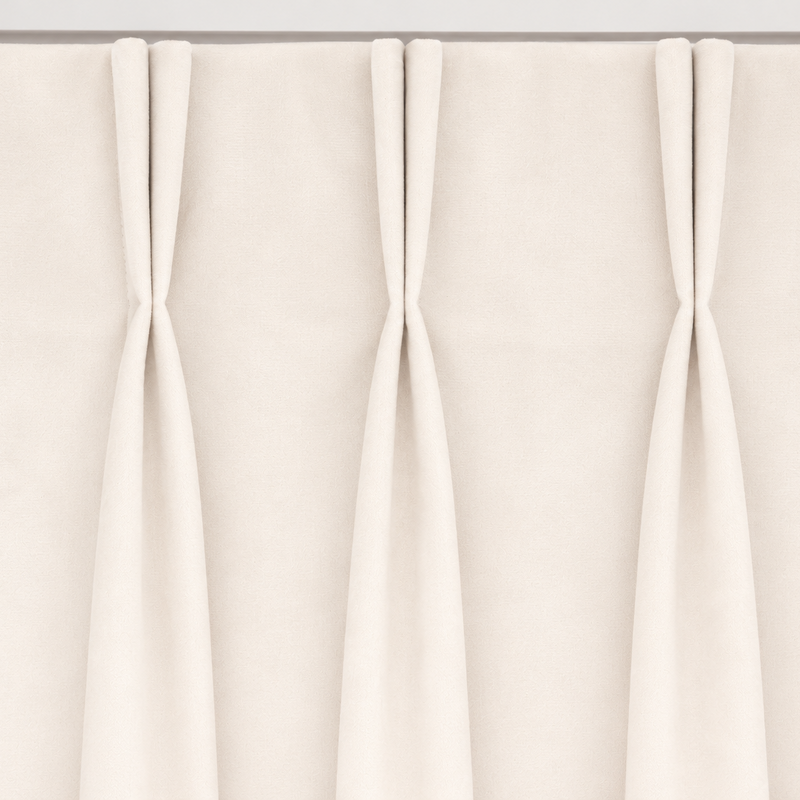
Double pinch pleat
More defined pleats
This version features pre-formed double pleats at regular intervals for a more decorative look and greater fullness at the top of the curtain.
The pleats retain their shape and give the curtain an even drape.
Microflex hooks are already fitted and sewn onto the curtain for hanging on a track. The hooks are height-adjustable.
Installation: on a track compatible with the Microflex hooks.
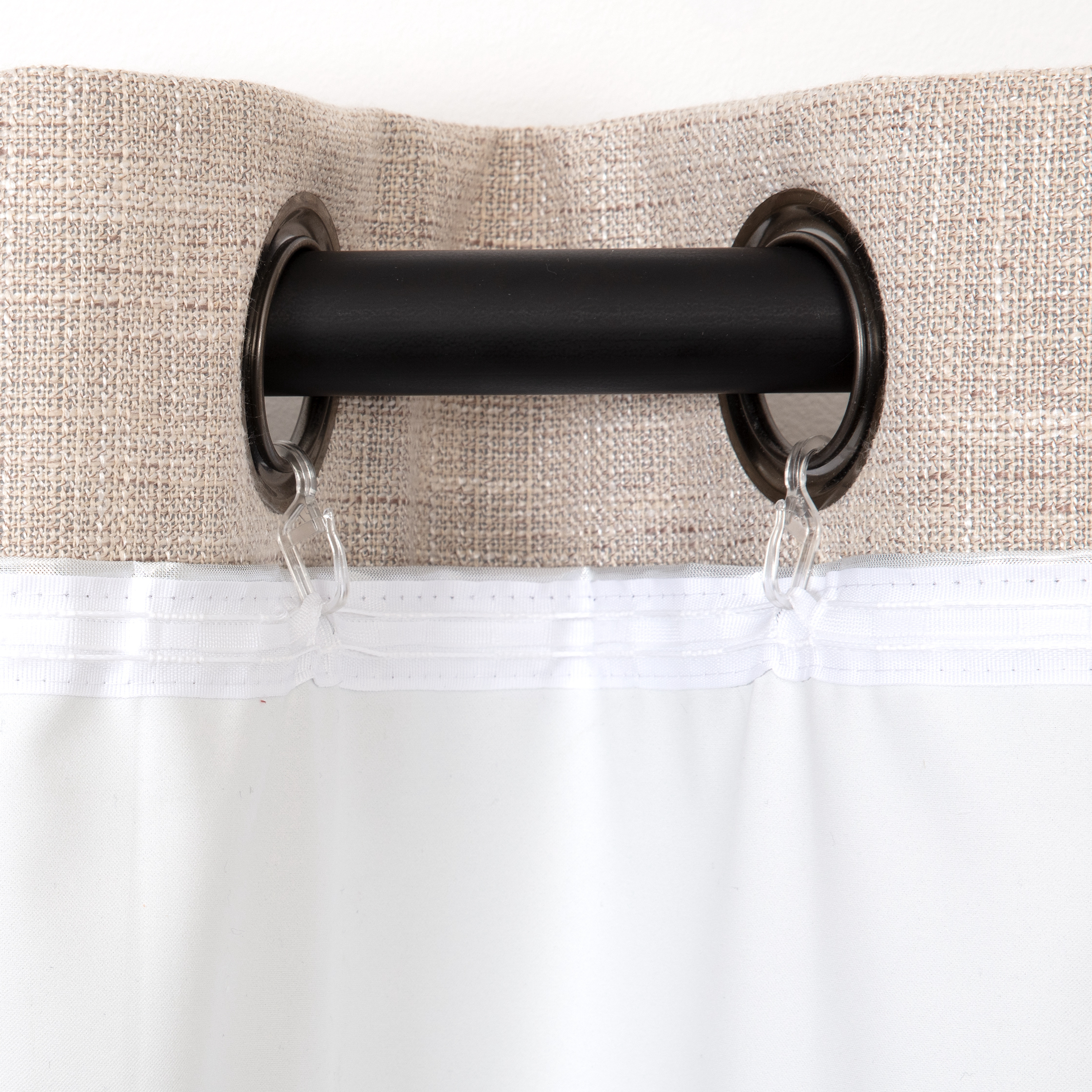
Lining hooks
For an existing curtain
This attachment option is exclusively for linings.
The hooks attach the lining to the back of your eyelet or pencil pleat curtain. You can enjoy the lining’s benefits while keeping your existing hanging system, with no sewing required.
The transparent hooks remain discreet once fitted.
Installation: attached directly to the curtain using the hooks.
Our installation tutorial
Watch our video for step-by-step installation guidance.
Which hanging system do you need?
Curtain rods and tracks are neither supplied nor sold on our website. Choose a system that is compatible with your heading and can support the total weight of your curtains, particularly soundproof models and larger sizes.
For eyelet and rod pocket headings
Choose a round rod with a maximum diameter of 3 cm (approx. 1.18 inches) for eyelets, and a diameter of less than 3 cm (approx. 1.18 inches) for rod pockets.
For eyelets, leave at least 2.5 cm (approx. 0.98 inches) between the top of the rod and the ceiling to accommodate the fabric above the eyelet.
For pencil pleat and pinch pleat headings
A pencil pleat curtain hangs on a track or a rod fitted with rings compatible with its hooks.
For the single and double pinch pleat headings shown in this guide, choose a track compatible with the Microflex hooks fitted to the curtain.
Secure your rod or track firmly to the wall or ceiling. Avoid tension rods that fit without drilling. For wider installations, additional brackets may be needed: position them so the curtain can open and close as intended.
Where possible, position the rod at least 15 cm (approx. 5.91 inches) above the window, extending approximately 20 cm (approx. 7.87 inches) beyond each side.
Plan your made-to-measure curtains
Measuring, choosing the drape and deciding on the number of panels: explore our advice to help you prepare your order.